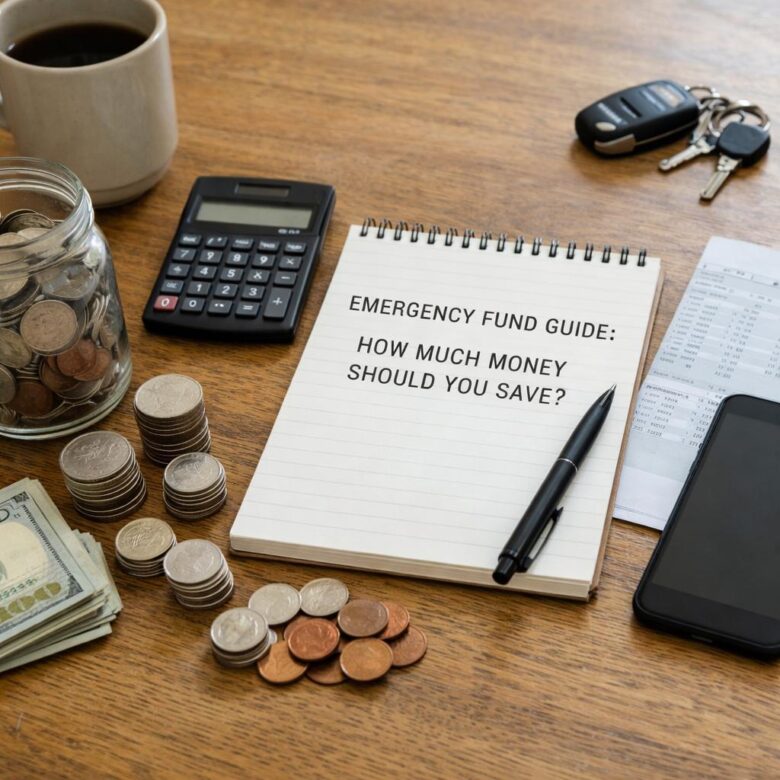
Could you cover your next emergency without reaching for a credit card?
An emergency fund is the money that keeps a job loss, medical bill, car repair, or urgent home expense from turning into long-term debt.
But the right amount is not the same for everyone. Your income stability, monthly expenses, dependents, insurance coverage, and risk tolerance all change the number.
This guide breaks down how much you should save, where to keep it, and how to build your emergency fund even if you are starting with very little.
Emergency Fund Basics: What It Covers and Why It Protects Your Budget
An emergency fund is money set aside for urgent, necessary expenses that your normal monthly budget cannot absorb. It is not for holidays, upgrades, or planned purchases; it is financial protection for moments when delaying payment could create bigger problems.
Common uses include car repairs, medical bills, home appliance replacement, job loss, insurance deductibles, or urgent travel for a family emergency. For example, if your car needs a $900 repair and you rely on it for work, using savings can help you avoid putting the bill on a high-interest credit card or taking out a personal loan.
- Keep it separate from your checking account to reduce impulse spending.
- Use a high-yield savings account so the money stays accessible and earns interest.
- Track your target with a budgeting app like YNAB or Monarch Money.
In real life, the biggest benefit is not just covering the expense; it is protecting your cash flow. A single surprise bill can cause late fees, overdraft charges, missed credit card payments, or even damage to your credit score if you have no backup.
A good emergency fund also helps you make calmer decisions. Instead of accepting the first expensive repair quote or using a payday loan, you have time to compare costs, check warranty coverage, and choose the option that makes the most financial sense.
How Much Emergency Savings You Need: Calculating Your Target by Expenses, Income, and Risk
Your emergency fund target should be based on essential monthly expenses, not your full lifestyle spending. Add up rent or mortgage payments, utilities, groceries, insurance premiums, minimum debt payments, transportation, prescriptions, and any must-pay childcare costs.
A practical starting point is three months of essentials if you have stable income and low debt. Aim for six months or more if you are self-employed, work on commission, support dependents, have a variable income, or face higher medical costs or insurance deductibles.
- Lower risk: salaried job, dual-income household, strong benefits – 3 months may be enough.
- Moderate risk: one income, car loan, high rent, or dependents – target 4 to 6 months.
- Higher risk: freelancer, contractor, business owner, or unstable industry – consider 6 to 12 months.
For example, if your essential expenses are $3,200 per month, a three-month emergency fund is $9,600, while a six-month target is $19,200. That number may feel large, so break it into milestones: first $1,000, then one month of expenses, then your full target.
Use a budgeting app like YNAB, Monarch Money, or a simple spreadsheet to separate essential expenses from optional spending. Keep the money in a high-yield savings account at an FDIC-insured online bank so it stays accessible while earning interest.
One real-life insight: the biggest emergency fund drain is often not a dramatic crisis, but overlapping costs, such as a car repair, medical bill, and reduced work hours in the same month. Build your target around that kind of pressure, not just one isolated expense.
Emergency Fund Mistakes to Avoid: Where to Keep Your Cash and When to Use It
One common mistake is keeping your emergency fund in a checking account that earns almost nothing, or worse, investing it in stocks where the value can drop right when you need cash. A better option is a high-yield savings account, money market account, or cash management account from platforms like Ally Bank, Capital One, or Fidelity. The goal is simple: easy access, FDIC or SIPC protection where applicable, and a competitive interest rate without taking market risk.
Another mistake is using emergency savings for predictable expenses. Car insurance premiums, holiday shopping, annual subscriptions, and routine home maintenance should be planned in a sinking fund, not pulled from your emergency cash. For example, if your water heater fails, that is a legitimate emergency; if property taxes are due every year, that belongs in your budget.
- Use it for: job loss, urgent medical bills, major car repairs, emergency travel, essential home repairs.
- Avoid using it for: vacations, upgrades, sale items, gifts, or expenses you could delay.
- Keep it separate: use a dedicated savings account so daily spending does not slowly drain it.
A practical rule is to make withdrawals only when the expense is necessary, unexpected, and time-sensitive. After using the fund, rebuild it before increasing investments, extra loan payments, or nonessential purchases. In real life, the people who manage emergency funds best usually treat the money as financial insurance, not spare cash sitting around.
The Bottom Line on Emergency Fund Guide: How Much Money Should You Save?
An emergency fund is not a fixed number-it is a financial safety margin tailored to your life. Start with a realistic first target, then build toward the level that matches your income stability, household responsibilities, and risk tolerance.
The best decision is the one you can sustain: keep the money accessible, automate contributions, and review your target whenever your job, expenses, or family situation changes. Even a modest fund can prevent debt during a crisis; a well-sized one gives you time, options, and peace of mind.

Dr. Samuel Bennett is a financial wellness educator who explains personal finance, insurance terms, and smart money habits in a simple and practical way. His goal is to help readers build a stronger foundation for everyday financial decisions.