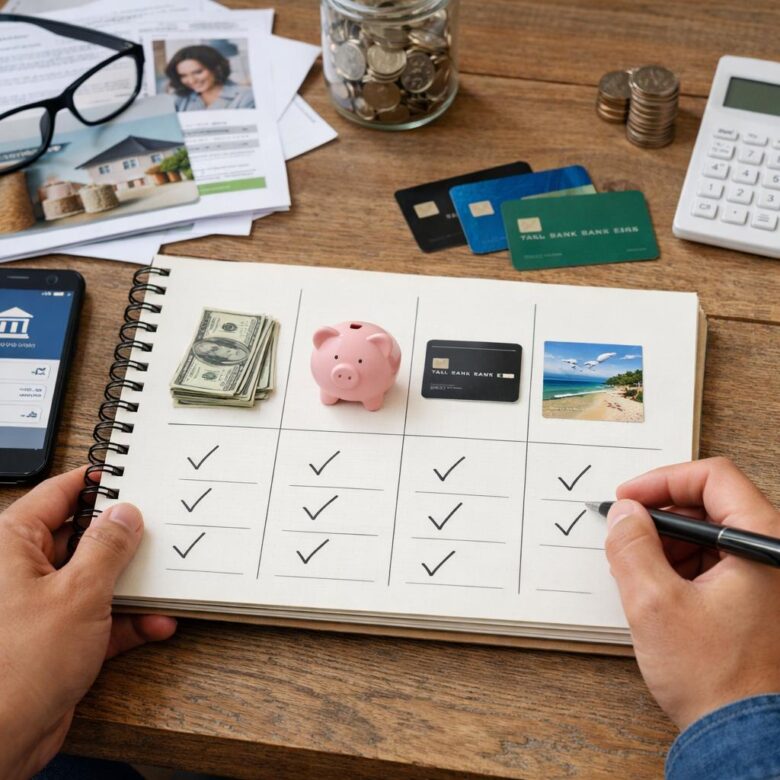
Is your bank account helping you build wealth-or quietly holding you back?
The right account can make saving easier, reduce fees, improve cash flow, and keep your money aligned with your goals. The wrong one can drain your balance through hidden charges, low interest, and poor access when you need funds most.
Choosing wisely means looking beyond the bank’s brand name and comparing how each account supports your real financial priorities-daily spending, emergency savings, long-term growth, or business needs.
This guide will help you understand what to look for, what to avoid, and how to match the right bank account to the way you actually manage money.
What Different Bank Account Types Are Designed to Do for Your Money
Each bank account has a job, and choosing the right one starts with matching that job to your financial goal. A checking account is built for everyday spending, bill payments, debit card purchases, and direct deposit, while a savings account is better for separating money you do not want to touch too easily.
For example, if your rent, utilities, insurance premiums, and subscriptions all come out monthly, keeping those funds in checking helps avoid missed payments and overdraft fees. But your emergency fund, vacation money, or home down payment savings usually belongs in a high-yield savings account where it can earn interest while staying accessible.
- Checking account: best for daily transactions, mobile banking, ATM access, and automatic payments.
- High-yield savings account: useful for emergency funds and short-term goals with better interest rates.
- CD account: works for money you can lock away for a set term in exchange for a fixed rate.
In real life, many people benefit from using more than one account instead of forcing one account to do everything. A simple setup might be a no-fee checking account for bills, an online savings account for emergencies, and a certificate of deposit for money reserved for a future car purchase.
Tools like NerdWallet or your bank’s mobile app can help compare account fees, minimum balance requirements, APY, ATM access, and overdraft protection. The key is not just finding the highest interest rate, but choosing an account structure that supports how you actually earn, spend, and save.
How to Match Checking, Savings, and Specialty Accounts to Specific Financial Goals
The easiest way to choose the right bank account is to start with the job your money needs to do. A checking account should handle daily spending, bill pay, direct deposit, debit card use, and ATM access, while a high-yield savings account is better for emergency funds, short-term goals, and money you do not want to accidentally spend.
For example, if your rent, utilities, insurance premiums, and subscriptions all come out monthly, keep one checking account for fixed expenses and another account or budgeting tool like Monarch Money to track flexible spending. This helps you spot overdraft risk, unnecessary banking fees, and cash flow gaps before they become expensive.
- Emergency fund: Use an FDIC-insured high-yield savings account with no monthly maintenance fee and fast transfers.
- Large purchase: Use a separate savings account for a car down payment, home renovation, or travel fund so the goal stays visible.
- Complex needs: Consider money market accounts, certificates of deposit, business checking, or a brokerage cash management account depending on access and risk tolerance.
A practical rule: money needed within the next 30 days belongs in checking, money needed within one to three years usually belongs in savings or CDs, and long-term wealth goals may require investment accounts rather than standard bank products. In real life, people often choose the “best interest rate” and forget transfer limits, mobile deposit quality, customer service, and ATM network access.
Before opening an account, compare the annual percentage yield, minimum balance requirements, overdraft protection options, wire transfer costs, and mobile banking features. The right account is not always the one with the highest APY; it is the one that supports your goal without adding friction or hidden costs.
Common Bank Account Fees, Limits, and Features to Compare Before You Open One
Before opening a checking account or high-yield savings account, compare the real cost of using it day to day. Monthly maintenance fees, overdraft fees, out-of-network ATM charges, wire transfer costs, and minimum balance requirements can quietly reduce the benefit of a “free” bank account.
A practical example: if a bank charges a $12 monthly fee unless you keep $1,500 in the account, that account may not fit someone who uses most of their cash for rent, debt payments, or investing. In that case, an online bank with no monthly fee and a competitive APY may offer better value.
- Fees: Check monthly service fees, overdraft protection costs, ATM reimbursement, paper statement fees, and international transaction charges.
- Limits: Review daily debit card limits, mobile check deposit limits, ACH transfer limits, and withdrawal restrictions.
- Features: Look for mobile banking, bill pay, early direct deposit, fraud alerts, Zelle support, budgeting tools, and FDIC insurance.
Use a comparison tool like Bankrate or your bank’s fee schedule PDF to verify the details before applying. I’ve seen people choose an account for a sign-up bonus, then lose value because the direct deposit requirement or minimum balance rule did not match their actual cash flow.
Also compare customer support access, branch availability, and app reliability if you handle frequent payments or business income. The best bank account is not always the one with the highest advertised interest rate; it is the one with the lowest friction for how you actually manage money.
Final Thoughts on How to Choose the Right Bank Account for Your Financial Goals
Choosing the right bank account is less about finding the “best” product and more about matching an account to the job you need it to do. Your goal should lead the choice: easy access for daily spending, higher returns for savings, low costs for stability, and useful tools for better control.
Before opening an account, compare fees, access, interest, limits, protections, and how well the bank fits your habits. If an account makes it easier to save, spend intentionally, and avoid unnecessary charges, it is serving your financial goals-not just holding your money.

Dr. Samuel Bennett is a financial wellness educator who explains personal finance, insurance terms, and smart money habits in a simple and practical way. His goal is to help readers build a stronger foundation for everyday financial decisions.